Common Name: Mother of Thousands, Alligator Plant, the Mexican Hat Plant
Characteristics: The succulent can grow up to 3 feet tall and about 1-2 feet wide and has the ability to produce small plantlets along the edges of its leaves.
Geographic Origin: Madagascar
Natural History: native to the Fiherenana River valley in southwest Madagascar
Cultivation Notes: Considered invasive in many warm regions of the world such as Florida and Texas
Ethnobotany: see chart below…
Wound healing: Poultices made from the leaf pulp have been applied topically to skin lesions, sores, burns, and wounds to aid healing, reduce scarring, and stop bleeding.
Inflammation: Traditionally used to treat inflammatory conditions like rheumatism.
Internal ailments: The plant has been used to treat diarrhea, dysentery, and cholera. It has also been used for respiratory issues, such as coughs.
Genitourinary issues: Uses include treating bladder infections and dissolving kidney stones.
High blood pressure: In some traditions, it has been used to address hypertension.
Childbirth: In some regions of Madagascar, the plant is believed to help prevent premature labor.
Note: Mother of thousands are toxic to humans and pets if ingested. Their milky sap can be a skinirritant, so be sure to wear gloves when pruning or repotting them!
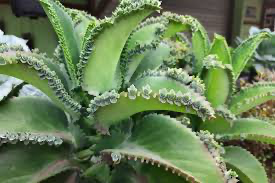
 Plants of Wade Rd